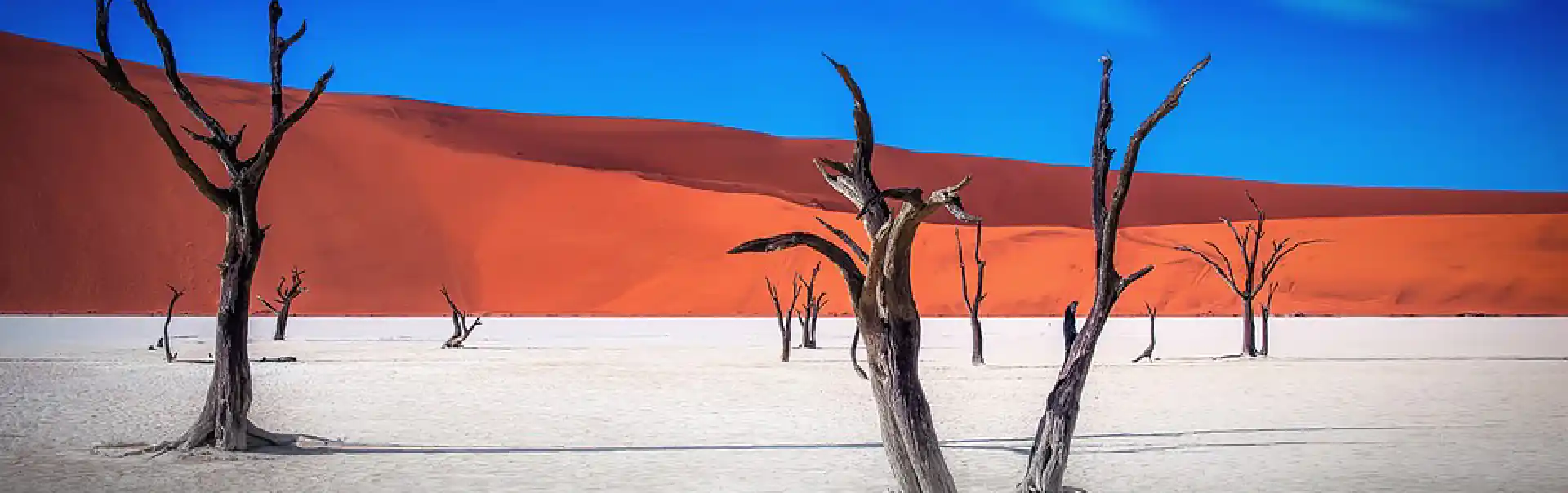
Namibia
Namibia,
located on the southwestern coast of Africa, is a country defined by stunning
contrasts—towering dunes, rugged mountains, endless deserts, and thriving
wildlife. With some of the continent’s most dramatic landscapes, Namibia offers
a rare sense of space, tranquility, and natural wonder.
Namibia’s
population is beautifully diverse, made up of groups such as the Ovambo, Damara,
Herero, Nama, and the San (Bushmen), one of the world’s oldest cultural groups.
Each community contributes unique languages, traditions, crafts, and attire.
The Himba people, known for their ochre-tinted skin and intricate hairstyles,
remain one of the country’s most iconic cultural symbols. English is the
official language, though many indigenous languages—Oshiwambo, Nama/Damara, and
others—are widely spoken.
Namibia
has a complex colonial past. Once a German colony (German South West Africa),
it later fell under South African rule. The country endured decades of struggle
before gaining independence in 1990, making it one of Africa’s youngest
nations. Today, Namibia is celebrated for its political stability and commitment to
conservation.
Namibia,
located on the southwestern coast of Africa, is a country defined by stunning
contrasts—towering dunes, rugged mountains, endless deserts, and thriving
wildlife. With some of the continent’s most dramatic landscapes, Namibia offers
a rare sense of space, tranquility, and natural wonder.
Namibia’s
population is beautifully diverse, made up of groups such as the Ovambo, Damara,
Herero, Nama, and the San (Bushmen), one of the world’s oldest cultural groups.
Each community contributes unique languages, traditions, crafts, and attire.
The Himba people, known for their ochre-tinted skin and intricate hairstyles,
remain one of the country’s most iconic cultural symbols. English is the
official language, though many indigenous languages—Oshiwambo, Nama/Damara, and
others—are widely spoken.
Namibia
has a complex colonial past. Once a German colony (German South West Africa),
it later fell under South African rule. The country endured decades of struggle
before gaining independence in 1990, making it one of Africa’s youngest
nations. Today, Namibia is celebrated for its political stability and commitment to
conservation.
Namibia is
divided into four main regions, each offering unique desert scenery,
wildlife, and cultural attractions.
1. Northern
Region
A
wildlife-rich, culturally vibrant area and home to Namibia’s most famous safari
destinations.
Key Areas
Ø
Etosha – iconic national park with huge salt
pans
Ø
Oshakati
& Ondangwa –
cultural centers of Ovamboland
Ø
Rundu – gateway to Kavango River
Ø
Katima
Mulilo – green,
riverine Zambezi Region
Ø
Tsumeb – mining town and Etosha entrance
2. Central
Region
The heart of
Namibia, mixing city life with historical towns and desert landscapes.
Key Areas
Ø Windhoek – capital city with markets, museums,
German influence
Ø Okahandja – craft markets and heritage
Ø Omaruru – wineries and art scene
Ø Waterberg Plateau – dramatic red cliffs and rare wildlife
3. Coastal
Region
Famous for
dunes, foggy coastlines, adventure sports, and dramatic desert-meets-ocean
scenery.
Key Areas
Ø Swakopmund – adventure hub (sandboarding, quad
biking)
Ø Walvis Bay – flamingos, dolphins, desert tours
Ø Skeleton Coast – shipwrecks and raw wilderness
Ø Henties Bay – fishing town
Southern Region
A region of
surreal landscapes, canyons, and vast desert spaces.
Key Areas
Ø Sossusvlei / Sesriem – home to Big Daddy & Dune 45
Ø Lüderitz – colorful coastal town
Ø Kolmanskop – abandoned ghost town in the desert
Ø Keetmanshoop – Quiver Tree Forest
Ø Fish River Canyon – Africa’s largest canyon
Namibia offers
world-class scenery, national parks, desert adventures, and cultural
experiences.
Ø Sossusvlei & Deadvlei
Ø Etosha National Park
Ø Skeleton Coast National Park
Ø Fish River Canyon
Ø Swakopmund & Walvis Bay
Ø Kolmanskop Ghost Town
Ø Damaraland
Ø Caprivi/Zambezi Region
Ø Waterberg Plateau
Ø Lüderitz & Shark Island
Ø Wood Carvings & Sculptures
Ø Local Art & Paintings
Ø Handwoven Baskets & Crafts
Ø Namibian Textiles
Ø Namibian Coffee & Rooibos Tea
Ø Jewelry & Accessories
Ø Gemstones & Minerals
Ø Leather Goods
Ø Natural Beauty Products
Ø Decorative Home Items
Namibia is a
year-round destination, but seasons affect wildlife, desert travel, and coast
conditions.
1. Best
Overall Time: May – October (Dry Season)
Most
recommended for travel.
Ø Clear skies and mild weather
Ø Peak wildlife viewing in Etosha
Ø Perfect for desert visits (Sossusvlei,
Skeleton Coast)
Ø Excellent adventure activities
2. Wet/Green
Season: November – April
Landscapes
become greener, with occasional rain.
Ø Lush scenery
Ø Birdwatching at its peak
Ø Calving season in Etosha (Jan–Mar)
Ø Fewer tourists